Pages

Saturday, March 25, 2006


Another Himalayan belief is that dZi are dropped from the heavens by the Gods. Beads are discarded because they are thought to have imperfections. This explains to the people of the Himalayas why so many dZi are not found in perfect condition.
Some Tibetans believe that dZi beads are the dung of the sacred Garuda bird. The Garuda is traditionally known to be the enemy of the Nagas (snake spirits) and is often depicted with a snake (symbolic of the Naga) in its mouth. Probably because of this connection, dZi are used as an antidote for sickness caused by Nagas, which are normally very difficult to cure. Usually naga sickness is associated with problematic skin or diseases such as leprosy. In traditional Tibetan medicine dZi are mixed with 69 other ingredients to form precious pills called Ratna Samphel.

Thursday, March 09, 2006


Image: Chokgyur Lingpa (1829-1870) was one of the major tertons (revealer of hidden Dharma treasures) in Tibetan history.

"Chokling also discovered the Sabdün Phurba. To take out this terma, he dug a hole in a small rock. Looking inside, he saw 75 kilaya daggers emitting sparks of fire. He took the main phurba which was made of zi stone. The terma teaching of Sabdün Phurba was written on yellow parchment on the knot of the phurba. This phurba is now in the possession of H.H. Karmapa . Dazang Rinpoche has another phurba and Sabchu Rinpoche in Nepal has the consort phurba. Discovering many other amazing termas in similar ways, his fame grew and so did the number of his attendants and disciples"  Excerpt taken from the short biography on the life of Chogyur Lingpa.


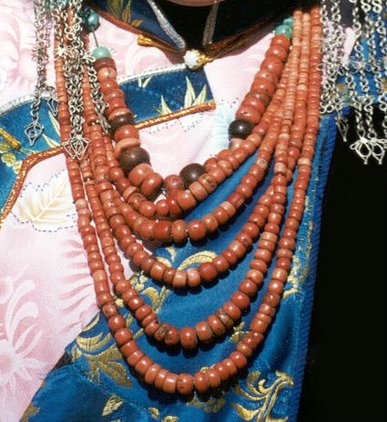
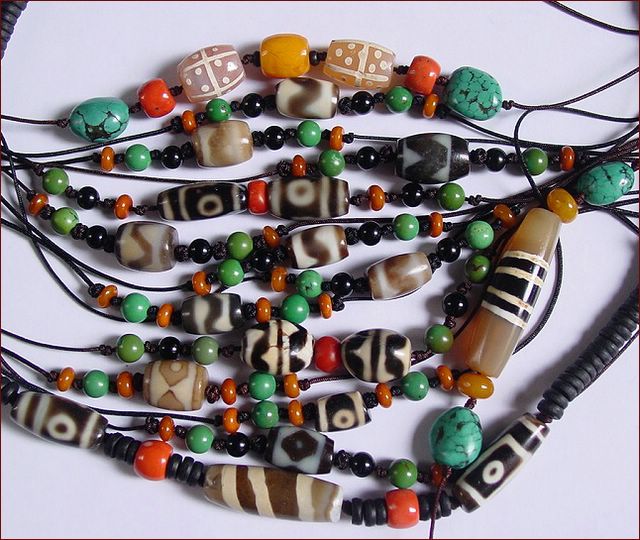
Natural coral, turquoise and dZi.

Photo: His Holiness the 16th Gyalwa Karmapa

"On the fifteenth day of the ninth month of the male iron dragon year (1940) he traveled to Tsurphu, visiting the Penchen monastery on the way. In that place there was a statue of the Protector Zhing Kyong, riding on a horse. As soon as Karmapa approached the horse it started to neigh, much to the surprise of everyone. He proceeded to Dam Chung, where the main Deity offered him a large unpierced nine-eyed Zi stone, a type of precious banded-agate. The party reached Tsurphu on the eleventh day of the eighth month of the female iron snake year (1941)"

Taken from a short biography of the 16th Karmapa

Wednesday, March 08, 2006

Above: Detail from a Tibetan Thangka displaying a man holding a coral branch.

The Tibetan Medical system was introdcued in the 8th Century CE by the accomplished master, Yutog Gonpo the Elder. It is thought that these early medical texts were influenced by the Ayurvedic medical systems of India, and also Chinese and Persian medicine. In the previous century, the Tibetan King Songsten Gampo (617-698) had already invited great scholars and doctors from China, India and Persia. This also helped to establish the Tibetan writing system. These early texts did not become well known until Yutog Gonpo the Younger (1126-1212) merged these texts with his own medical treatise known as the 'Four Tantras'. They were completed in the 12th Century.

The first 'illustrated' Tibetan medical texts were probably the Blue Beryl treatise of Sangye Gyamtso (1653-1705) and this clearly shows that coral was an important and prized ingredient in many medical treatments. There also many Thangka paintings from as early as the 14th century, that show red coral branches as precious offerings. The fact that coral was valued as a medicinal ingredient in the Four Medical Tantras (12th Century), shows us that it was already deeply rooted in Tibetan culture at this time.

 Above: Antique mediterranean coral sourced in Nepal.

In Tibetan Medicine there is a precious healing pill that includes coral as a main ingredient. It is said that this pill was formulated in ancient times and called the 'Rinchen Byur-dmar 25' also known as RINCHEN JUMAR-25 (Precious Coral-25 ) "It is prescribed for headaches, fainting, brain afflictions, fever that has been caused by poisonous substances, neuritis and chronic diseases. It is also believed to counteract stiffness and paralysis originating in the nervous system". There is also a pill said to originate from the 13th Century called the Rinchen Ratna bsam-pel (Precious Wish Fulfilling Jewel). It contains detoxified mercury, dZi, coral, turquoise and many other semi-precious stones.

Tibetans were not just using this material for medicine but more widely for personal adornment. We can also find a large number of early Tibetan statues and tantric ritual implements that have been inlaid with coral and various semi-precious stones. From the 1700s onwards there certainly seems to be an increase in mediterranean coral available to Tibet and the Himalayan regions. Many artifacts from this period show that coral was a popular material, because it is visible in all forms of Tibetan art and jewellery.

It is possible that the carnelian beads known as Pema Raka were once the most common and desirable of all the 'red' beads. When the mediterranean coral trade increased, the Pema Raka probably became less desirable, with Tibetans favouring the more exotic imported ocean coral. In today's marketplace, coral is by far the most expensive of all the orange/red Himalayan beads. It is also scarce due to mediterranean coral trade bans and has therefore become even more sought after. We also see many imitation coral beads in the marketplace to satisfy this demand. Pema Raka beads are sometimes referred to as 'poor man's coral', but I do not feel these beautiful beads were ever a substitute for red coral. Pema Raka (carnelian) may have been introduced long before coral became popular in Tibet. 

 Above: Antique Pema Raka Bead

The vivid carnelian used in creating Pema Raka may have come from China. However, it has been suggested that the earliest Pema Raka may have been traded from Afghanistan. The red glass beads known as 'Sherpa Coral', which first appeared in the Himalayas towards the end of the 19th Century, were clearly designed to imitate red coral. They were affordable and their striking red colour made them an attractive alternative to coral and carnelian.

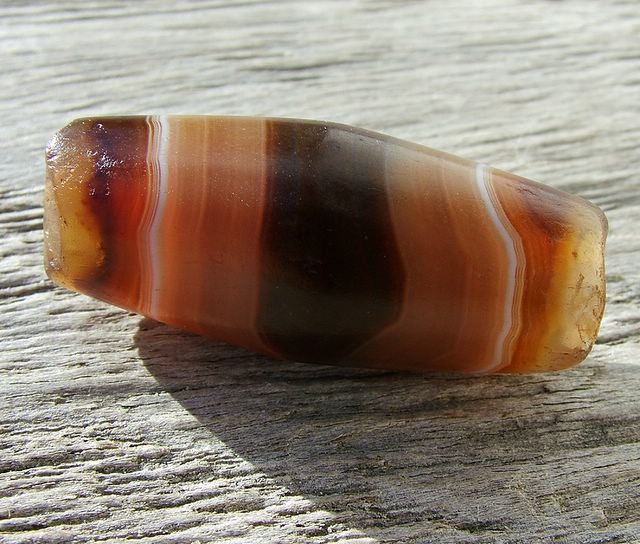
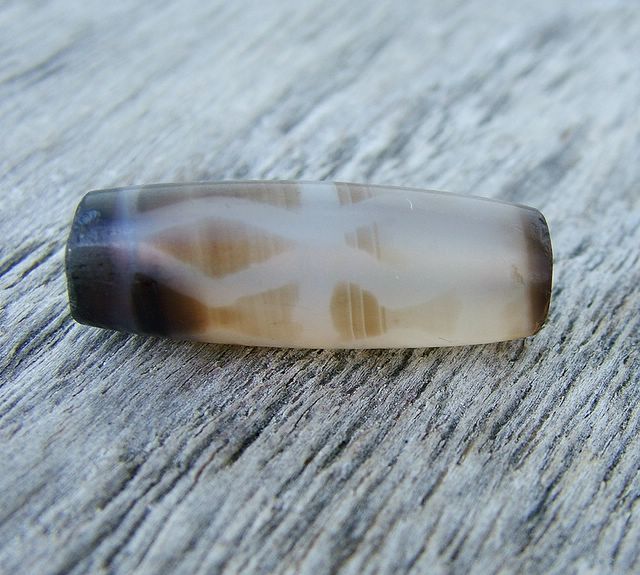
Ancient translucent banded agate.


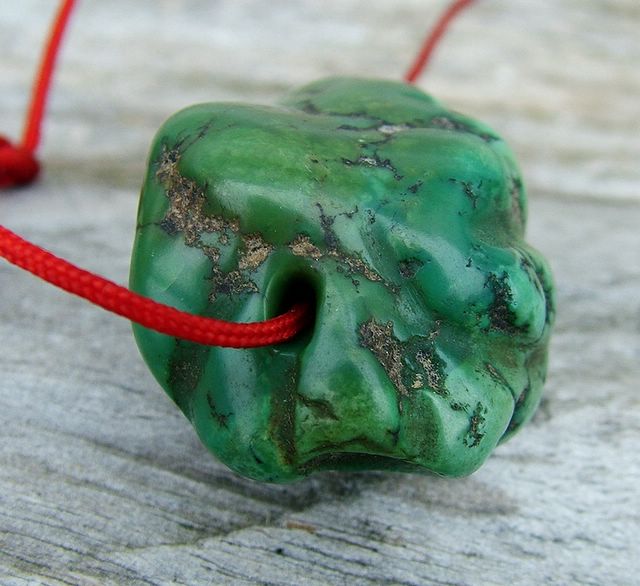
Antique turquoise bead.


Ancient Agate Chung dZi


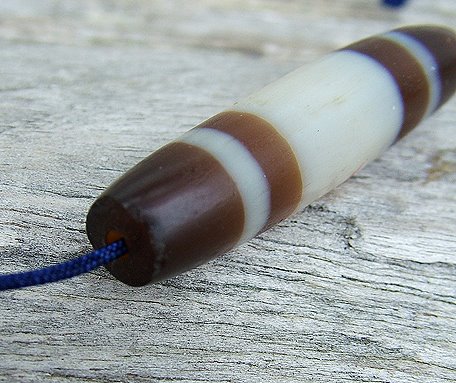
Ancient Three Striped Chung dZi


Ancient Four Striped Chung dZi


Ancient dZi with diamond eyes or vajra


Single Stripe Carnelian/Agate dZi


Ancient dZi with unsual motif


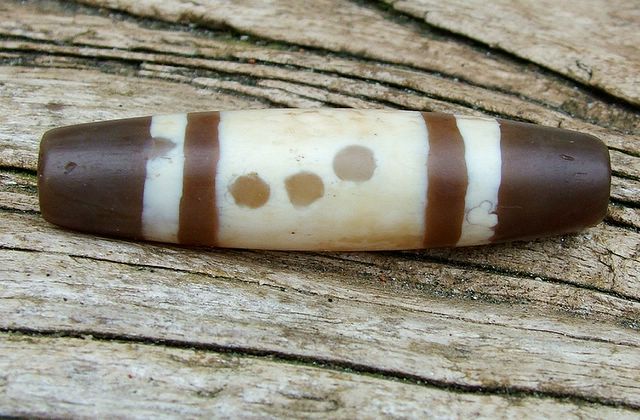
Ancient Three Striped Chung dZi


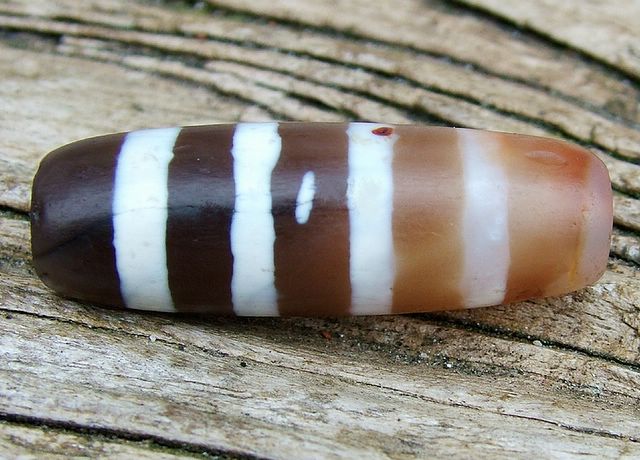
Ancient Four Striped Chung dZi


Three Striped Chung dZi


Luk Mik dZi


Decorated (Etched) Carnelian displaying the longevity design. 
Dense blood spots can be seen on the body.


Two Tone Ancient Agate dZi


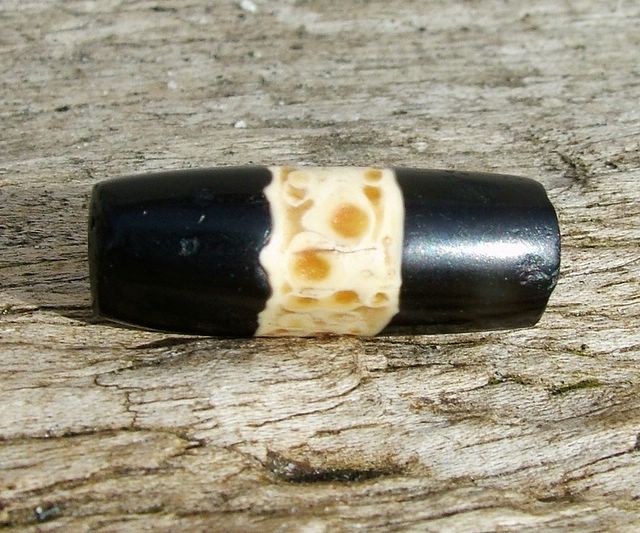
Single Stripe Ancient Black and White dZi

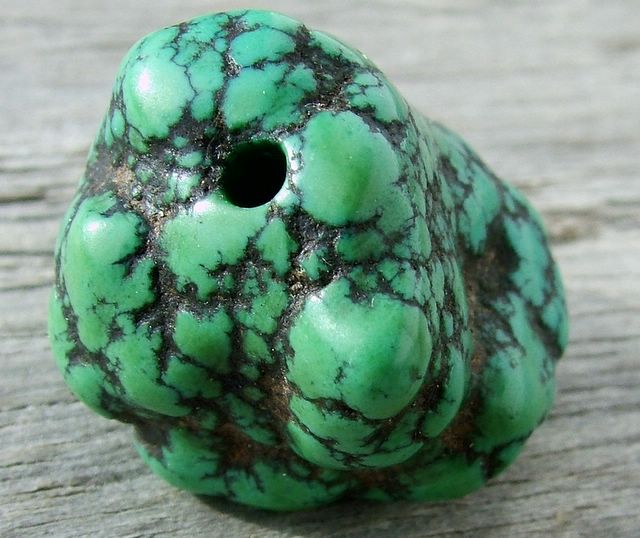
Genuine Old Turquoise

Wednesday, January 11, 2006


A fantastic display of gilded hair adornments and earrings with natural old coral. The necklace comprises genuine coral of various grades mixed with modern dZi beads.


Beautiful Tasso dZi.

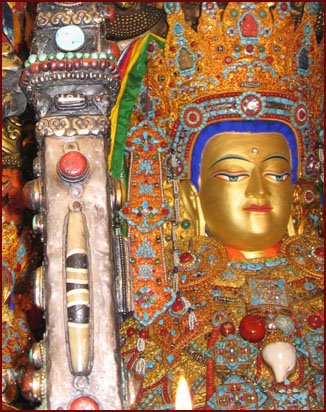
Huge Chung dZi at the Jokhang Temple.


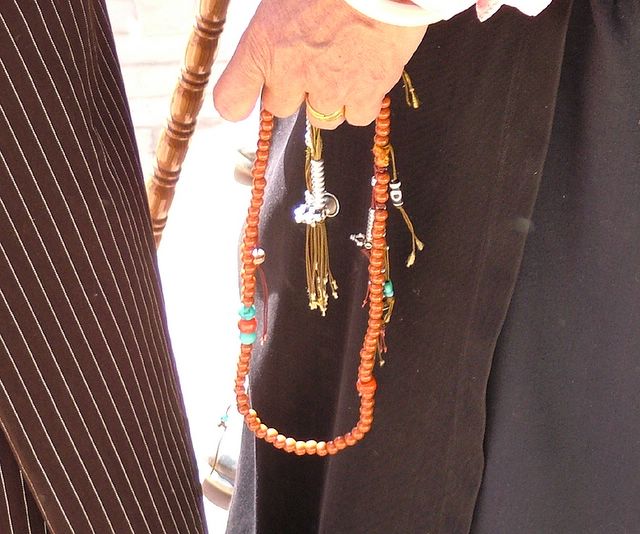
A Tibetan Mala (rosary).


A selection of ancient decorated agate and carnelian beads.

Wednesday, November 09, 2005


A striking combination of heirloom amber and coral bead adornments.

Beautiful amber and coral hair adornments.

Wednesday, July 27, 2005


Thangka Paintings of King Gesar of Ling

The legendary King Gesar of Ling is believed to have plundered many treasures from the Kingdom Of Tajik (Persia). It is said that many dZi beads were also amongst these treasures.
Photo: Tibetan Thangka Painter

Tibetans have a very rich tradition of sacred iconography and paintings are known by the name 'Thangka'. The apprentice is expected to spend many years studying under a master artist. Some works can take several years to complete and are often painted with natural stone pigment paints. For that extra special touch, some artists will use a dZi bead to apply and burnish gold. The dZi is mounted like a brush on a wooden handle, which helps give the artist more precision. It is believed that Thangkas will carry a unique and luminous quality by using a dZi bead tool.
Above: Sangye Menla (Medicine Buddha)
 
Ancient dZi beads have been used in Tibetan medicine for centuries. Small shavings of whole dZi or broken fragments of dZi are ground up and mixed with other herbs and minerals. Pills (Tibetan: Rilbu) are then made and ingested to cure all manner of illness. Dzi medicine is thought to cure epilepsy, lower blood pressure and ward of harmful spirits.

Friday, May 06, 2005


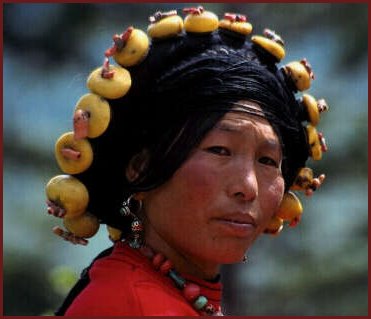
Tibetan nomadic woman with dZi, turquoise, coral and amber hair adornments.

Thursday, May 05, 2005


Himalayan bead traders in Himachal Pradesh (Northern India). These days they sell mostly imitation coral and reconstituted or colour enhanced turquoise that is imported from China. Occasionally you will find some traders with the 'good stuff'.

Tuesday, March 22, 2005


Huge Nine Eyed dZi bead discovered in Bhutan. 
This bead remains in a private collection in Nepal.

A collection of ancient dZi beads.

Sunday, February 06, 2005


Large Twelve Striped Etched Carnelian. Pyu Period, Burma.

Ancient Glass Bead


Many ancient glass beads were designed to look like banded agate. They were also an affordable alternative to genuine stone beads.

Friday, February 04, 2005

Ancient Carnelian Eye Beads


These beads were excavated in the City of Balh, Afghanistan. Similar beads have been found in the Indus Valley, Egypt and Iran. Although these beads are commonly known as 'etched' carnelian it is now known that no etching is involved. The beads were decorated by adding an alkali, soda or potash solution and then fired. The design was then able to penetrate the surface of the bead and leave the very distinctive white decoration against a background of fiery orang

Wednesday, February 02, 2005

The Value of dZi


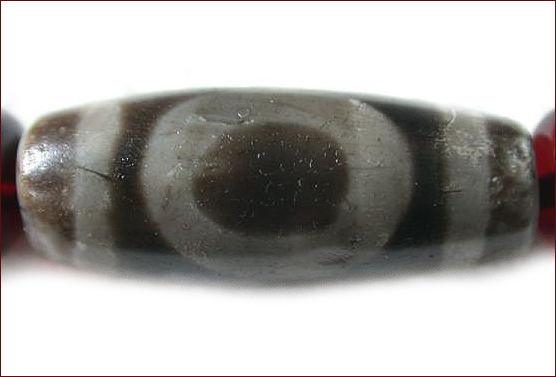
 Above: A rare ancient Phum dZi bead with eyes.
  • Availablity.
There are relatively very few ancient dZi beads that come into the marketplace and this keeps the demand for these beads very high. They are cherished items and their owners will not readily part with them. If they are important heirloom beads they are even less likely to be sold.

  • Rarity of Decorations.
The rarest decorations will command the highest prices. Also, certain types of dZi are more desirable than others. There will also be some designs that are rarely seen in the marketplace or have never been seen, and it is easy to become out of touch with true market prices if one spends little or no time traveling in Asia. 

In the year 2000 you could purchase a reasonable two eyed dZi for somewhere between $1000 and $2000. In 2008 the best beads can command between $4000 and $12,000. Escalating prices make purchasing dZi difficult for the collector and it also becomes increasingly difficult for the dealers to acquire them. This is one of the many reasons that so many imitation beads are being sold. With demand so high and prices rising they are now out of reach of most collectors. Rocketing prices makes many believe that they are a very sound investment.


  • Rarity of Size and Shape
Generally the larger the bead the more valuable it becomes. Also, beads that have a shape that is less common can drive prices higher. For example, a bow shaped Chung dZi will often be more desirable than a fusiform or cylinder bead.

Sunday, January 30, 2005

Homa Ritual


Ancient Sakor Namkor dZi
 
This Sakor Namkor dZi and similar beads with a distinct dullness, are commonly looked upon as fire offering beads (although it is still unproven). Homa is an ancient fire ritual which is said to stem from the vedic sciences and is still a very important practice for Hindus. Tibetans Buddhists practice their own form of fire puja, however, it is unconfirmed if dZi beads are ever used in these offerings. If a homa is performed correctly, it is believed to remove all manner of karmic obstacles. The decoration on burnt beads will usually have a greyish look and an appearance that does not reflect the light. They are still valued but they are usually less desirable in the Tibetan marketplace. It is also possible that these beads were overheated during their creation, but since Tibetans do not believe dZi are created by man they do not adopt this belief.
also see http://en.wikipedia.org/wiki/Homa_(ritual)

Damaged dZi


A widely held Tibetan belief is that a damaged dZi bead has absorbed or averted a major catastrophe or protected the owner from great negativity or misfortune. Although this dZi has been damaged it has continued to be worn and cherished by the owner. The damaged zone has been worn smooth from centuries of being worn on the body and has developed a smooth waxy patina from rubbing on the body and absorbing oils from the skin. It is a clear example of a bead that has not been discarded because of a breakage. The fact that the eyes remain completely damage free is what matters to the owner of this bead. Usually if a damaged dZi is worn then it is normally beads that have eyes intact or beads with unusual motifs that are preferred. Also, if the damaged bead has a strong colour then it is still believed to have amuletic power.

A damaged bead is often set into a ring or pendant if it is a suitable size. If broken, the two halves are often joined back together with a gold band or the ends are capped with gold to disguise the damage. Undamaged beads are rarely capped or framed with precious metal because they are considered more valuable and more potent if kept whole. Damaged dZi are also fashioned into a tool that can be used to apply gold to traditional Thangka paintings. Broken dZi fragments are also ground down and used in Tibetan Medicine.

Small Three Eye dZi


A very nice small barrel shaped two eyed dZi. This type of dZi is certainly more affordable than other eyed beads. They make wonderful additions to Malas and necklaces.

Ancient Collection


A stunning selection of fine ancient dZi and other collectible ancient beads.

Tiger dZi


A superb necklace of ancient Tiger dZi.